The Ultimate Silver Stacking Guide for 2026
The Ultimate Silver Stacking Guide for 2026
Macroeconomic Trends Impacting Silver Stacking
The core disconnect for silver stackers lies in the divergence between the metal’s spot price and its intrinsic value as a monetary and industrial asset. While macroeconomic narratives fluctuate, the enduring forces of currency devaluation and industrial demand create a compelling case for silver as a store of value.
Inflation and Purchasing Power

Inflation, understood through the lens of monetary expansion, erodes the purchasing power of fiat currencies. The Consumer Price Index (CPI) often lags behind the reality of monetary debasement. As central banks globally engage in quantitative easing and maintain historically low-interest rates, the long-term implications for currency values become increasingly apparent.
Consider the period following the 2008 financial crisis. The Federal Reserve’s balance sheet expanded from approximately $900 billion to over $4 trillion by 2014. This injection of liquidity into the financial system did not immediately translate into hyperinflation, but it laid the groundwork for future price increases and a gradual decline in the dollar’s purchasing power. The trend continued during the COVID-19 pandemic, with unprecedented levels of monetary stimulus.
Silver, as a tangible asset, offers a potential hedge against this devaluation. Unlike fiat currencies, silver possesses intrinsic value derived from its industrial applications and its historical role as a monetary metal.
Interest Rate Policies and Capital Misallocation

Artificially low-interest rates, often maintained by central banks to stimulate economic activity, distort price signals and lead to capital misallocation. Austrian Business Cycle Theory posits that these interventions create unsustainable booms followed by inevitable busts.
When interest rates are suppressed, businesses and individuals are incentivized to take on more debt than they otherwise would. This leads to overinvestment in certain sectors, such as real estate or technology, creating asset bubbles. When the artificial stimulus is removed, these bubbles burst, resulting in economic contraction.
Silver’s role in this environment is twofold. First, as a hard asset, it tends to perform well during periods of economic uncertainty and financial instability. Second, it offers a degree of insulation from the direct impact of interest rate fluctuations. While higher interest rates can increase the opportunity cost of holding silver (as it does not yield interest), the metal’s safe-haven appeal often outweighs this factor during turbulent times.
Currency Fluctuations and Geopolitical Risk

Currency fluctuations and geopolitical risks introduce additional layers of complexity to the macroeconomic landscape. A weakening U.S. dollar, for example, can make dollar-denominated assets more attractive to foreign investors, potentially driving up demand for silver.
Geopolitical instability, such as trade wars or military conflicts, can also boost silver prices as investors seek safe-haven assets. The Silver Institute noted in February 2026 that “Elevated geopolitical tensions, concerns over the Federal Reserve’s independence, and persistent uncertainty surrounding US policy have continued to support precious metals investment.”
Furthermore, the potential for currency wars, where countries deliberately devalue their currencies to gain a competitive advantage in international trade, adds another layer of uncertainty. In such scenarios, silver can act as a neutral store of value, preserving wealth regardless of which currency is declining.
Supply and Demand Dynamics

The silver market is characterized by a persistent supply deficit, driven by increasing industrial demand and constrained mine production. The Silver Institute forecasts a sixth consecutive year of market deficit in 2026, estimating it at a “noteworthy 67 Moz.” This structural imbalance puts upward pressure on prices and underscores silver’s potential as an investment.
Industrial demand for silver is driven by several key sectors, including electronics, solar panels, and electric vehicles. As the global economy transitions towards cleaner energy sources, the demand for silver in these applications is expected to increase.
Mine production, on the other hand, has struggled to keep pace with rising demand. A significant portion of silver is produced as a byproduct of other mining operations, such as gold, copper, lead, and zinc. As Peter Krauth noted, “about 75 percent of silver is mined as a by-product of other metals.” This means that silver production is often constrained by the economics of these other metals, rather than the demand for silver itself.
The Gold-Silver Ratio
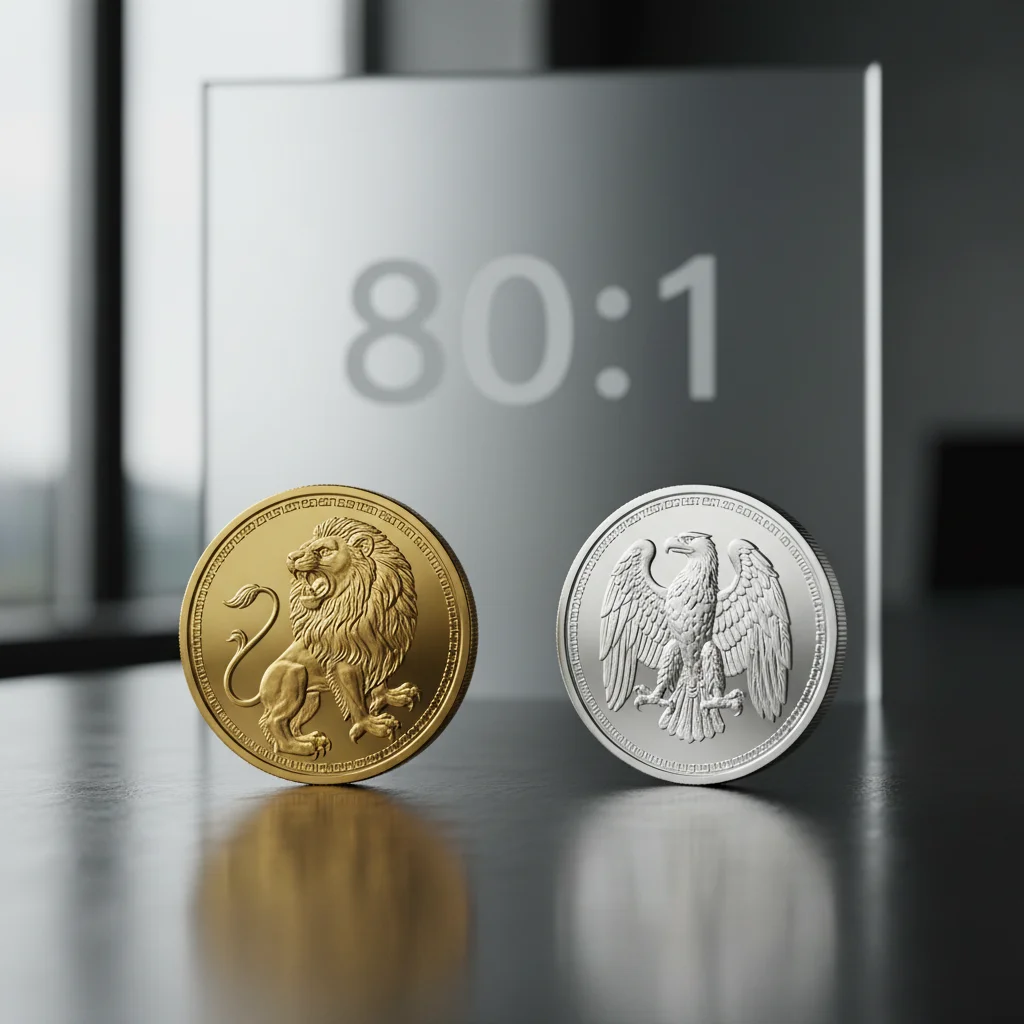
The gold-silver ratio, which measures the number of ounces of silver required to purchase one ounce of gold, provides a useful indicator of relative value. Historically, this ratio has fluctuated between 16:1 and 100:1. As of early 2026, the ratio fell below 50, a level last seen in 2012, suggesting that silver may be undervalued relative to gold.
However, it is important to note that the gold-silver ratio is not a precise predictor of future price movements. It is simply a tool that can be used to assess relative value and identify potential opportunities. A high gold-silver ratio may indicate that silver is undervalued and poised for a rally, while a low ratio may suggest the opposite.
Forecasts and Projections

Analysts’ forecasts for silver prices in 2026 vary widely, reflecting the inherent volatility of the metal and the uncertainty surrounding the macroeconomic outlook. Some analysts, such as those at Citigroup, predict that silver will continue to outperform gold and reach upwards of $70 per ounce. More bullish forecasts, such as those from Frank Holmes and Clem Chambers, see silver reaching $100 per ounce.
It is important to approach these forecasts with caution and to conduct thorough due diligence before making any investment decisions. The silver market is subject to rapid shifts in sentiment and unexpected events, which can significantly impact prices.
Silver’s Dual Role: Monetary and Industrial

Silver’s unique appeal lies in its dual role as both a monetary metal and an industrial commodity. This combination of factors provides a strong foundation for long-term value appreciation.
As a monetary metal, silver offers a hedge against currency devaluation and financial instability. It has a long history of being used as a store of value, and it remains a popular choice among investors seeking to protect their wealth.
As an industrial commodity, silver is essential to a wide range of industries, including electronics, solar panels, and electric vehicles. This industrial demand provides a floor under prices and ensures that silver will continue to be a valuable asset in the future.
Capital Preservation Protocol
Given the macroeconomic trends outlined above, a prudent capital preservation protocol for silver stackers might include the following steps:
- Diversify Holdings: Allocate a portion of your portfolio to physical silver, but do not put all your eggs in one basket.
- Dollar-Cost Averaging: Purchase silver at regular intervals to mitigate the impact of price volatility.
- Secure Storage: Store physical silver in a safe location, such as a home safe or a reputable depository.
- Stay Informed: Keep abreast of macroeconomic developments and industrial trends that could impact silver prices.
- Maintain a Long-Term Perspective: Silver stacking is a long-term strategy, not a get-rich-quick scheme. Be patient and focus on the fundamentals.
In conclusion, while macroeconomic conditions are constantly evolving, the underlying forces of currency devaluation, industrial demand, and geopolitical risk create a compelling case for silver as a store of value. By understanding these trends and implementing a prudent capital preservation protocol, silver stackers can potentially protect their wealth and benefit from the metal’s unique role in the global economy.
Silver Supply and Demand Dynamics (2026)
The silver market in 2026 presents a compelling case study in persistent structural deficits amidst fluctuating demand drivers. While the year began with extraordinary momentum, including the strongest annual increase since 1979 and a breach of the $100 per ounce level in January, a deeper examination reveals nuanced shifts in both supply and demand.
Demand-Side Pressures: A Mixed Bag
Global silver demand is projected to remain relatively stable in 2026. However, this stability masks diverging trends across key sectors.
Industrial fabrication, a significant component of silver demand, is forecast to decline by 2% to approximately 650 million ounces, a four-year low. This contraction is primarily attributed to “thrifting” and substitution in the photovoltaic (PV) sector. Despite increasing global solar installations, the PV industry’s silver demand is waning due to more economical usage and the adoption of alternative materials.
Conversely, certain industrial applications are expected to provide a partial offset. The expansion of data centers, the proliferation of Artificial Intelligence (AI)-related technologies, and the automotive industry are projected to bolster silver consumption. These sectors underscore silver’s indispensable role in technologically advanced applications, providing a degree of resilience against the decline in PV demand.
The jewelry and silverware sectors are facing headwinds. Jewelry demand is projected to decline for the second consecutive year, falling by over 9% to 178 million ounces, the lowest level since 2020. High prices are the primary deterrent, particularly in price-sensitive markets like India. China stands as an exception, with demand potentially rising slightly due to product innovations and the increasing popularity of gold-plated silver jewelry. Silverware demand is expected to contract even more sharply, declining by approximately 17% in 2026, with India again being the focal point of this decline.
Investment Demand: A Bullish Counterweight
Physical investment demand emerges as a key counterpoint to the weakening trends in other sectors. It is forecast to surge by 20% to a three-year high of 227 million ounces. This resurgence is fueled by a recovery in Western physical investment after three years of decline, driven by silver’s price performance and ongoing macroeconomic uncertainty. Investment demand in India is also expected to build on the strong figures from the previous year, reflecting positive investor sentiment.
The early part of 2026 saw silver prices rise by 11% as of February 9th. Elevated geopolitical tensions, concerns regarding central bank independence, and persistent uncertainty surrounding economic policy have collectively supported precious metals investment. This macro-environment underscores the Austrian perspective that silver, alongside gold, serves as a hedge against systemic instability and monetary debasement.
Supply-Side Constraints: A Persistent Deficit
On the supply side, total global silver supply is forecast to increase by 1.5% in 2026, reaching a decade high of 1.05 billion ounces. This growth is attributed to both mine production and recycling.
Mine production is expected to rise by 1% to 820 million ounces, driven by increased output from existing operations and recently commissioned projects. Mexico is expected to see growth primarily from primary silver mines. China anticipates higher output from China Gold International’s Jiama polymetallic mine due to ongoing plant expansions. Canada is expected to benefit from newly commissioned projects and existing primary gold and silver operations, notably Hecla’s Keno Hill and New Gold’s New Afton. In Morocco, Aya Gold and Silver’s Zgounder mine is expected to contribute as its ramp-up phase concludes. Peru, however, faces headwinds with lower production from operations such as Nexa Resources’ Cerro Lindo and Buenaventura’s Tambomayo.
Silver production as a by-product from primary gold mines is also forecast to grow in 2026. Increases are expected from Barrick Mining’s Pueblo Viejo in the Dominican Republic, Gold Fields’ Salares Norte in Chile, and Polymetal International’s Nezhda in Russia. In contrast, supply from base metal operations is expected to decrease marginally year-on-year, reflecting the impact of suppressed zinc and lead prices on the sustainability of these operations.
Silver recycling is projected to rise by 7%, with volumes surpassing 200 million ounces for the first time since 2012. This increase is largely driven by silverware, as consumers capitalize on elevated prices to sell scrap.
The Deficit Reality: Above-Ground Stocks Dwindle
Despite the anticipated increase in supply, the silver market is expected to remain in deficit for the sixth consecutive year in 2026, with a projected shortfall of 67 million ounces. This persistent deficit underscores a fundamental imbalance between supply and demand.
The report highlights a critical point: the global silver market will continue to rely on the release of bullion from above-ground inventories to bridge this gap. This reliance places additional strain on an already tight physical market. The continuous depletion of readily available silver stocks is a structural vulnerability, particularly in an environment of rising geopolitical tensions and monetary uncertainty.
Implications for Capital Preservation
The projected dynamics for 2026 reinforce the strategic importance of silver as a store of value. The ongoing supply deficit, coupled with increasing investment demand, suggests a continued upward trajectory for prices. While industrial demand may experience some contraction due to thrifting in the PV sector, the expanding applications of silver in AI, data centers, and the automotive industry provide a degree of diversification and long-term support.
Given these factors, a prudent capital preservation protocol would include:
- Accumulation of Physical Silver: Prioritize the acquisition of physical silver in the form of bars and coins to directly benefit from potential price appreciation and to minimize counterparty risk.
- Diversification: While silver offers a hedge against monetary devaluation, it is essential to maintain a diversified portfolio that includes other precious metals like gold, as well as strategic allocations to sectors that benefit from technological advancements.
- Monitor Industrial Demand Trends: Closely track the performance of key industrial sectors, particularly AI, data centers, and automotive, to assess the long-term sustainability of silver demand.
- Assess Mine Production: Monitor the output of major silver-producing regions, including Mexico, China, and Peru, to identify potential disruptions in supply.
- Evaluate Recycling Dynamics: Keep abreast of trends in silver recycling, as this source of supply can play a crucial role in mitigating the overall deficit.
In conclusion, the silver market in 2026 presents a complex interplay of supply and demand factors. While certain sectors face contraction, the overall outlook remains positive, driven by strong investment demand and a persistent supply deficit. A well-informed and strategic approach to capital preservation, emphasizing physical accumulation and diversification, is essential for navigating this dynamic landscape.
Key Drivers of Silver Stacking Demand

Silver stacking, the accumulation of physical silver in bullion or coin form, is driven by a confluence of factors extending beyond simple investment speculation. It represents a tangible response to perceived vulnerabilities in the financial system and anxieties surrounding geopolitical stability. This section explores the primary motivations behind this demand, the role of “stacker” communities, and the broader implications for the silver market.
Wealth Preservation in a Devaluing Monetary Landscape
A primary driver is the desire to preserve wealth amidst concerns about currency devaluation. Official data may not fully reflect the decline in purchasing power, but stackers often view silver as a hedge against the erosion of fiat currencies. This perspective gains traction when central bank policies appear to prioritize short-term economic stimulus over long-term monetary stability. While avoiding hyperbole, it’s critical to acknowledge that sustained expansion of the M2 money supply, even if not resulting in immediate CPI spikes, structurally debases the currency.
The Silver Institute reported that global silver investment is expected to remain strong in 2026, even against the backdrop of a sixth consecutive annual market deficit. This suggests a persistent belief in silver’s store of value properties, irrespective of short-term price fluctuations.
Geopolitical Uncertainty and Safe-Haven Demand
Geopolitical instability is another significant catalyst. As noted by the UniAthena report, “tariff threats between major economies and foreign policy flashpoints are pushing investors toward precious metals, especially silver, as a partial hedge alongside gold.” This “safe-haven” demand tends to increase during periods of heightened global tensions. Silver, unlike many financial assets, carries no counterparty risk.
While gold is often the first choice as a safe haven, silver’s relative affordability makes it accessible to a broader range of investors. This accessibility contributes to the resilience of silver demand, particularly during periods of economic uncertainty.
Banking System Concerns and Counterparty Risk
Anxieties regarding the stability of the banking system also fuel silver stacking. While widespread bank failures may be unlikely, the events of early 2023, where several regional banks in the U.S. experienced significant turmoil, served as a reminder of the potential for systemic risk.
Silver, as a physical asset, offers a degree of insulation from the risks inherent in holding deposits within financial institutions. This is particularly appealing to those who prioritize minimizing counterparty risk. The comments section of a February 10, 2026 Investing.com article highlights this sentiment, with one user stating “Physical Demand is off the charts. Comex needs to become more realistic with their Paper prices.” This underscores the disconnect between paper silver and the desire for physical possession.
The Role of “Stacker” Communities
The rise of online “stacker” communities has amplified the demand for physical silver. These communities, often found on social media platforms and dedicated forums, serve as information hubs, facilitating the exchange of knowledge, strategies, and even silver itself. They reinforce the belief in silver’s value proposition and provide a sense of collective action.
These communities are not monolithic. Some are driven by libertarian ideals and a distrust of government-controlled currencies. Others focus on practical wealth preservation and view silver as a long-term store of value for their families. Regardless of their specific motivations, these communities play a crucial role in disseminating information and promoting the accumulation of physical silver.
Industrial Demand as a Foundation for Stacking
While wealth preservation and geopolitical concerns are primary motivators, the increasing industrial demand for silver provides a fundamental underpinning for the stacking movement. The UniAthena report highlights that “industrial usage (solar, EVs, AI, semiconductors) now plays a dominant role in how the silver price is determined.” This means that even if investment demand were to wane, a significant base level of demand would remain due to silver’s essential role in various technological applications.
This “dual engine” of investment and industrial demand provides a degree of stability that is not always present in other precious metals. It also reinforces the argument that silver is not merely a speculative asset, but a commodity with intrinsic value tied to the growth of key industries.
Supply Deficits and the “Scarcity” Narrative
The narrative of persistent supply deficits further encourages silver stacking. As the UniAthena report notes, silver has been in a “persistent global supply deficit for years, and 2026 continues this streak.” The Silver Institute confirms this, projecting a 67 million ounce deficit in 2026. This perceived scarcity, coupled with growing demand, creates a compelling case for accumulating silver before supplies become even tighter.
It is important to differentiate between a genuine supply deficit and a manufactured one. While the data suggests a real imbalance between supply and demand, the “stacker” communities often amplify this narrative, creating a sense of urgency and encouraging further accumulation.
Investment Participation and ETF Flows
Investment participation, particularly through silver-backed ETFs, also influences stacking demand. While not all ETF investors are “stackers” in the traditional sense, the flows into these instruments can impact the physical silver market. As ETFs acquire physical silver to back their shares, they reduce the available supply, potentially driving up prices and further incentivizing stacking.
However, it’s essential to recognize that ETF demand can be volatile. Large inflows can be followed by equally large outflows, which can create short-term price fluctuations. Therefore, relying solely on ETF flows as an indicator of long-term stacking demand can be misleading.
The “Silver Squeeze” Phenomenon
The “silver squeeze” attempt in early 2021, while ultimately unsuccessful, demonstrated the potential for coordinated action within the “stacker” community to influence silver prices. Although the attempt to drive the price to exorbitant levels failed, it highlighted the growing awareness of silver’s potential and the ability of online communities to mobilize capital.
While a repeat of the “silver squeeze” is unlikely, the event served as a wake-up call to the broader market. It demonstrated the passion and conviction of the “stacker” community and their willingness to act on their beliefs.
Capital Preservation Protocol for the Silver Stacker
Given the diverse motivations behind silver stacking, a prudent capital preservation protocol should incorporate the following:
- Diversification: Silver should be part of a broader investment strategy, not the sole focus.
- Physical Possession: Prioritize holding physical silver over paper contracts to minimize counterparty risk.
- Gradual Accumulation: Employ a dollar-cost averaging approach to mitigate the impact of price volatility.
- Secure Storage: Ensure secure storage of physical silver, whether through a home safe or a reputable depository.
- Due Diligence: Conduct thorough research before purchasing silver from any source to avoid counterfeit products.
In conclusion, the demand for silver stacking is driven by a complex interplay of factors, including wealth preservation, geopolitical uncertainty, banking system concerns, and the influence of online communities. While the long-term outlook for silver remains uncertain, understanding these motivations is crucial for investors seeking to navigate the complexities of the precious metals market.
Regulatory Environment and Taxation
The regulatory landscape and taxation policies significantly influence the attractiveness of silver as an investment and store of value. Investors must navigate a complex web of capital gains taxes, Goods and Services Tax (GST), and the potential implications of Central Bank Digital Currencies (CBDCs). Furthermore, emerging “sound money” legislation could reshape the investment environment for precious metals.
Capital Gains Tax Implications
Capital gains tax treatment varies depending on the form in which silver is held and the holding period.
- Sovereign Gold Bonds (SGBs): In Budget 2026, the capital gains tax exemption on SGBs was revised. The exemption now applies only if the bonds are subscribed at the time of issuance and held until maturity. If SGBs are purchased in the secondary market, gains are taxed according to applicable income tax slab rates. The 2.5% annual interest earned on SGBs is also taxable at slab rates. If sold within 12 months, STCG are taxed at slab rates. If held beyond 12 months and sold before maturity, LTCG is taxed at 12.5% without indexation.
- Silver ETFs: Silver ETFs are treated as listed securities for tax purposes. Gains from units sold within 12 months are taxed at slab rates, while gains from units held beyond 12 months are taxed at 12.5% without indexation.
- Gold and Silver Mutual Funds: If gold and silver mutual fund units are sold within 24 months, gains are taxed at slab rates. However, if held for more than 24 months, long-term capital gains are taxed at 12.5%.
- Physical Silver: Physical silver attracts a 3% GST on the value, with jewelry-making charges incurring an additional 5% GST. If sold within 24 months, gains are taxed at slab rates; if held beyond 24 months, gains are taxed at 12.5% without indexation. GST paid cannot be set off against capital gains tax.
- Digital Silver: Digital silver, like physical silver, attracts a 3% GST at purchase. If sold within 24 months, gains are taxed at slab rates; if held beyond 24 months, long-term capital gains are taxed at 12.5% without indexation.
- Gifted and Inherited Silver: Gifted silver from non-relatives exceeding Rs 50,000 is taxable. Inherited silver is not subject to GST or interest income tax, but capital gains tax applies at the time of sale, considering the original owner’s cost and holding period.
The disparity in tax treatment across different silver investment vehicles creates arbitrage opportunities and influences investor preferences. For instance, the revised SGB rules may incentivize holding until maturity but disincentivize secondary market purchases.
CBDCs and Precious Metals
The potential introduction of CBDCs poses both challenges and opportunities for silver stackers. On one hand, CBDCs could increase government surveillance and control over financial transactions, potentially limiting the use of physical silver for privacy reasons. On the other hand, if CBDCs are perceived as unreliable or subject to debasement, they could drive further demand for silver as a store of value outside the traditional financial system.
The key consideration is whether CBDCs will be designed to coexist with or replace existing fiat currencies. A scenario where CBDCs are used to “nudge” citizens toward certain spending behaviors or impose negative interest rates could significantly increase the appeal of hard assets like silver.
“Sound Money” Legislation
Several jurisdictions are considering or have enacted “sound money” legislation aimed at recognizing gold and silver as legal tender and removing sales taxes on precious metals transactions. The primary goal is to reduce the friction associated with using gold and silver in everyday commerce and to promote their acceptance as a legitimate form of payment.
Features of sound money legislation often include:
- Sales Tax Exemptions: Eliminating sales taxes on the purchase of gold and silver bullion and coins.
- Legal Tender Status: Recognizing gold and silver as legal tender, meaning they can be used to settle debts.
- State Depository: Establishing a state-level depository for precious metals, providing a secure storage option for residents.
- Protection Against Confiscation: Enacting laws that protect privately held gold and silver from government seizure.
The impact of sound money legislation is twofold. First, it directly reduces the cost of acquiring and using precious metals, making them more attractive to investors and consumers. Second, it sends a powerful signal about the state’s commitment to sound monetary principles, which can boost confidence in gold and silver as a reliable store of value.
Correlation Between Tax Policies and Silver Demand
A hypothetical example illustrates the impact of tax policy on silver demand. Assume a jurisdiction imposes a 20% capital gains tax on silver ETF profits held for less than two years, but exempts physical silver holdings from capital gains tax if held for more than five years. This policy would likely incentivize investors to hold physical silver for the long term, potentially reducing the supply of silver ETFs available in the market and increasing the demand for physical bullion.
The Role of Regulatory Clarity
Regulatory clarity is paramount for fostering a stable and predictable investment environment for silver. Ambiguous or inconsistent regulations can create uncertainty and discourage investment. For example, if the tax treatment of digital silver is unclear, investors may be hesitant to allocate capital to this asset class.
Conversely, clear and consistent regulations can promote confidence and attract investment. Jurisdictions that have a well-defined legal framework for precious metals are likely to see greater adoption and utilization of silver as a store of value and medium of exchange.
Capital Preservation Protocol
Given the evolving regulatory and tax landscape, investors should consider the following:
- Diversify Holdings: Allocate capital across different forms of silver (physical, ETFs, mutual funds) to mitigate the impact of specific tax policies.
- Long-Term Perspective: Adopt a long-term investment horizon to benefit from lower capital gains tax rates on longer holding periods.
- Jurisdictional Considerations: Evaluate the regulatory and tax environment in different jurisdictions to identify favorable locations for storing and transacting in silver.
- Stay Informed: Monitor regulatory changes and tax law updates to adapt investment strategies accordingly.
- Consult Professionals: Seek advice from tax advisors and financial planners to optimize tax efficiency and navigate complex regulations.
The regulatory environment and taxation policies will continue to play a crucial role in shaping the investment landscape for silver. By understanding these factors and adopting a proactive approach, investors can effectively preserve capital and potentially enhance returns in the years ahead.
Competitive Landscape: Alternatives to Silver
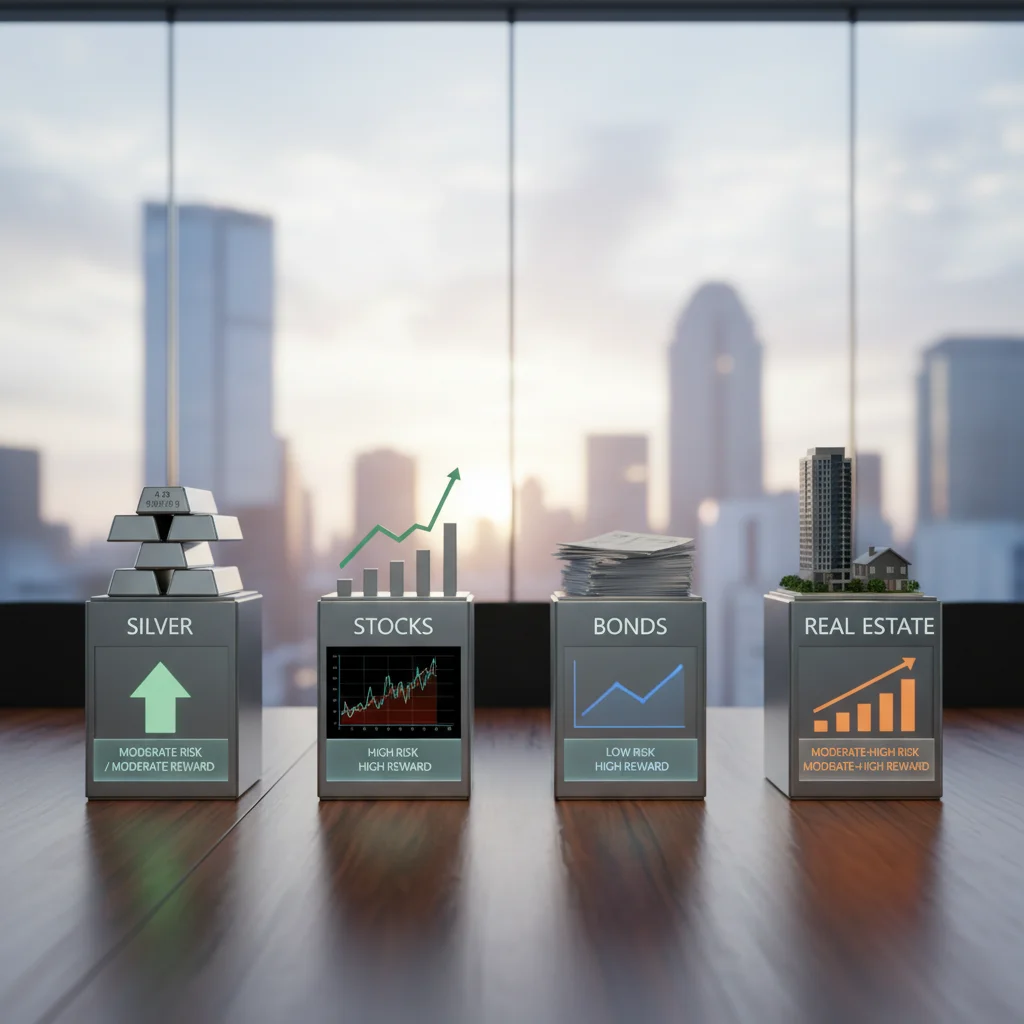
While silver presents a compelling case for capital preservation and potential appreciation, a prudent investor must evaluate its risk/reward profile against other asset classes. This section provides a comparative analysis of silver against gold, Bitcoin, real estate, and sovereign bonds.
Silver vs. Gold: The Monetary Metal Ratio
Gold, like silver, benefits from its historical role as a monetary store of value and a hedge against currency devaluation. However, their price dynamics often diverge. The gold-to-silver ratio, which reflects the number of silver ounces required to purchase one ounce of gold, serves as a key indicator. In February 2026, this ratio briefly fell below 50, a level last seen in 2012, before silver retreated below $80.00.
A declining ratio can suggest silver is outperforming gold and potentially undervalued, while a rising ratio suggests the opposite. However, this ratio is not a definitive buy/sell signal. Gold tends to perform better during periods of extreme risk aversion due to its superior liquidity and status as the ultimate safe haven. Silver, with its higher industrial demand component, can outperform during periods of economic expansion.
Silver vs. Bitcoin: Volatility and Adoption
Bitcoin, the leading cryptocurrency, presents itself as a digital alternative to gold. Its limited supply (21 million coins) and decentralized nature appeal to investors seeking to circumvent traditional financial systems. However, Bitcoin’s extreme volatility remains a significant drawback. Silver, while not immune to price swings, exhibits far less volatility than Bitcoin.
Furthermore, Bitcoin’s long-term viability as a store of value is still under debate. Regulatory uncertainty, technological risks (e.g., quantum computing), and the potential for competing cryptocurrencies to erode its market share pose challenges. Silver, with its millennia-long track record as a monetary metal and its essential industrial applications, offers a more established and arguably less speculative value proposition.
Silver vs. Real Estate: Illiquidity and Maintenance
Real estate, particularly residential property, is often viewed as a tangible asset that provides both income (rental) and capital appreciation. However, real estate is inherently illiquid. Selling a property can take months, and transaction costs (commissions, taxes) can be substantial. Silver, in contrast, can be bought and sold relatively quickly and with lower transaction costs, especially when using allocated storage programs.
Moreover, real estate requires ongoing maintenance, property taxes, and insurance. These costs can erode returns, especially during periods of economic downturn. Silver, requiring only secure storage, avoids these recurring expenses. While real estate can offer diversification and potential inflation protection, its illiquidity and maintenance burdens make it a less flexible and potentially more capital-intensive investment than silver.
Silver vs. Sovereign Bonds: Counterparty Risk and Yield
Sovereign bonds, particularly those issued by developed nations, are generally considered low-risk investments. They offer a fixed income stream and are backed by the full faith and credit of the issuing government. However, sovereign bonds are not without risk. Inflation can erode the real value of their fixed payments, and rising interest rates can depress their market value.
Furthermore, sovereign bonds carry counterparty risk – the risk that the issuing government may default on its obligations. While defaults by developed nations are rare, they are not impossible, especially in an era of rising debt levels. Silver, as a physical asset with no counterparty risk, offers a degree of security that sovereign bonds cannot match. While bonds can provide income and stability in a portfolio, their vulnerability to inflation and counterparty risk makes silver a potentially more attractive option for long-term capital preservation.
The Opportunity Cost: A Balanced Perspective
Comparing silver to other asset classes requires considering opportunity cost – the potential returns forgone by choosing one investment over another. While silver may not offer the same potential for rapid capital appreciation as Bitcoin or certain growth stocks, its unique combination of monetary history, industrial demand, and limited supply makes it a compelling alternative for investors seeking to protect their wealth against currency devaluation and economic uncertainty.
Industrial Demand: A Silver Lining
Unlike gold, silver possesses significant industrial applications. The Silver Target market, essential for various applications in electronics and manufacturing, is currently valued at approximately $18 billion. Projections indicate a growth rate of around 4% CAGR over the next five years. Thin-film deposition, enhancing conductivity in semiconductors, and improving image quality in monitors are key areas driving this demand. A report by Irrevernt Insights projects the market to expand annually by 11.9% (CAGR 2026-2033). This industrial demand provides a fundamental floor for silver prices, mitigating downside risk compared to purely speculative assets.
Geographic Considerations
The silver target market shows robust growth globally. North America, led by the United States, holds a significant market share due to high industrial and investment demand. Europe, driven by Germany and the U.K., emphasizes sustainable technologies, further fueling silver demand. The Asia-Pacific region, particularly China and India, is experiencing rapid expansion due to increasing industrialization and growing affluence.
Competitive Landscape in Silver Target Market
Key players in the Silver Target market include Lesker, SAM, Nexteck, ZNXC, and Beijing Guanli. These companies offer diverse product offerings and varying degrees of global presence, driven by strategies related to R&D investment and market adaptation.
Conclusion: A Strategic Allocation
Silver, as of February 9, 2026, had risen by 11 percent. While the price volatility will remain a feature for the foreseeable future, its potential for long-term capital appreciation remains strong.
In conclusion, while each asset class offers unique advantages and disadvantages, silver’s blend of monetary history, industrial demand, and finite supply makes it a valuable component of a diversified portfolio. A strategic allocation to silver can provide a hedge against currency devaluation, inflation, and geopolitical risks, while also offering exposure to the growing industrial demand for this versatile metal. The decision to invest in silver, like any investment, should be based on an individual’s risk tolerance, investment objectives, and time horizon.
Price Forecast and Stacking Strategies
Predicting any asset’s price with certainty is impossible, but assessing probabilities based on current data provides a framework for strategic accumulation. This section outlines bull, base, and bear case scenarios for silver in 2026, coupled with practical stacking strategies.
Bull Case: $110 - $150/oz

The bullish argument hinges on continued monetary devaluation, persistent industrial demand, and geopolitical instability driving safe-haven flows.
- Monetary Policy: If central banks continue expanding M2 despite lagging CPI, silver benefits. The J.P. Morgan podcast alludes to a scenario where the appointment of Kevin Warsh as Fed chair initially triggered a 27% silver crash, alongside a 10% drop in gold prices. However, if the new Fed chair fails to meaningfully tighten monetary policy, the underlying inflationary pressures will likely resurface, supporting silver.
- Industrial Demand: The “electrification of everything” narrative remains a potent force. While J.P. Morgan notes the risk of solar manufacturers substituting away from silver, this shift will take time. Electric vehicles (EVs), AI data centers, and other high-tech applications will continue to require silver’s unique conductive properties.
- Geopolitical Risk: Heightened global tensions and currency wars could trigger a flight to precious metals. Silver, though more volatile than gold, often outperforms during periods of extreme uncertainty.
Stacking Strategy (Bull):
- Aggressive DCA (Dollar-Cost Averaging): Increase allocation to silver, deploying capital at regular intervals, regardless of short-term price fluctuations.
- Ratio Trading (Gold/Silver): Monitor the gold-to-silver ratio. If the ratio spikes above its historical average (e.g., >80:1), consider swapping a portion of gold holdings for silver, betting on ratio reversion.
- Leveraged Exposure (Caution): Consider using options or futures contracts to amplify gains, but only with a deep understanding of the risks involved. Limit leverage to a small percentage of the overall portfolio.
Base Case: $75 - $90/oz

The base case assumes moderate inflation, a slight slowdown in industrial demand, and a relatively stable geopolitical environment.
- Inflation Moderation: If central banks manage to curb inflation without triggering a severe recession, the demand for silver as an inflation hedge will subside somewhat.
- Industrial Substitution: As noted by J.P. Morgan, solar panel manufacturers may accelerate the adoption of silver-free technologies, reducing industrial demand.
- Geopolitical Equilibrium: A period of relative calm on the geopolitical front would reduce safe-haven flows into precious metals.
Stacking Strategy (Base):
- Moderate DCA: Continue accumulating silver at a consistent pace, but be prepared to adjust based on evolving market conditions.
- Physical vs. Paper: Maintain a diversified portfolio of physical silver (coins, bars) and paper silver (ETFs, mining stocks).
- Storage Solutions: Secure and diversify storage options for physical silver, considering home storage, private vaults, or allocated storage programs.
Bear Case: $50 - $70/oz

The bearish scenario involves aggressive monetary tightening, a sharp recession, and a significant decline in industrial demand.
- Aggressive Rate Hikes: If central banks aggressively raise interest rates to combat inflation, triggering a deep recession, silver prices could plummet.
- Demand Destruction: A severe economic downturn would curtail industrial demand for silver, particularly from sectors like automotive and electronics.
- USD Strength: A strengthening US dollar would exert downward pressure on commodity prices, including silver.
Stacking Strategy (Bear):
- Defensive Positioning: Reduce exposure to silver, focusing on capital preservation.
- Cash Reserves: Hold a significant portion of the portfolio in cash to capitalize on potential buying opportunities during a market downturn.
- Strategic Buying: Deploy capital gradually as silver prices decline, targeting specific price levels based on technical analysis and fundamental valuations.
Product Selection: Maximizing Value
The choice of silver products impacts storage, divisibility, and potential premiums upon resale.
- Silver Bullion Coins: Government-minted coins (e.g., American Silver Eagles, Canadian Silver Maple Leafs) offer guaranteed purity and liquidity. These typically carry a premium above spot price, reflecting minting and distribution costs.
- Silver Bars: Bars are available in various sizes (e.g., 1 oz, 10 oz, 100 oz, 1000 oz) and are generally cheaper per ounce than coins. Larger bars may be more difficult to liquidate quickly.
- Junk Silver: Pre-1965 US dimes, quarters, and half-dollars contain 90% silver. These coins are often available at a lower premium than bullion coins, but their silver content is slightly less.
- Silver ETFs: Exchange-Traded Funds (ETFs) like SLV offer exposure to silver prices without the need for physical storage. However, ETFs carry counterparty risk and do not provide direct ownership of silver.
- Mining Stocks: Investing in silver mining companies can provide leveraged exposure to silver prices. However, mining stocks are subject to company-specific risks and market volatility.
Optimal Product Mix:
A balanced approach involves holding a mix of silver bullion coins for liquidity, silver bars for cost-effectiveness, and a small allocation to silver ETFs or mining stocks for potential leveraged gains.
- Liquidity Buffer: Allocate a portion of silver holdings to easily saleable items like 1oz silver coins.
- Cost-Effective Stacking: Allocate the bulk of your capital to larger silver bars to reduce premium costs.
- Diversification: Hold a small allocation to mining stocks or ETFs for exposure to the broader silver market.
Stacking with a Long-Term View
Silver stacking is not a get-rich-quick scheme. It is a long-term strategy for preserving wealth and mitigating the risks of monetary devaluation and economic uncertainty. Consistent, disciplined accumulation, combined with a diversified product mix and a clear understanding of the market dynamics, can help investors achieve their financial goals.